
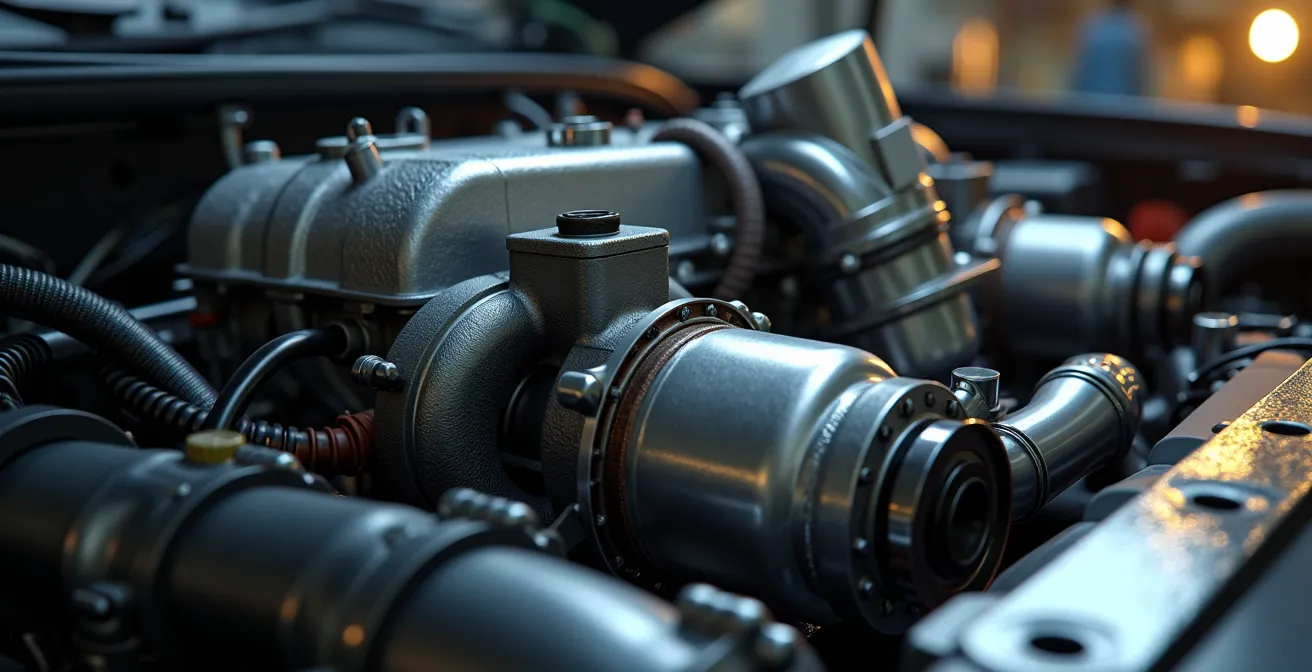
The key to fuel economy through remapping isn’t just software; it’s a calculated engineering decision that balances performance gains against long-term reliability and warranty risks.
- Manufacturers detune engines by up to 30% to create a safety margin for various global conditions and component longevity.
- A full ECU remap offers superior calibration and safety over a “piggyback” box but is more easily detected by dealers, potentially flagging your car’s warranty status (TD1 flag).
Recommendation: Prioritise a custom “economy” remap from a specialist who can prove they manage DPF regeneration cycles and exhaust gas temperatures, and always declare the modification to your insurer as a fuel-efficiency upgrade.
For any high-mileage driver or fleet manager, the relentless rise in fuel costs is a primary operational headache. You’ve likely heard whispers of a seemingly magical solution: ECU remapping. The promise is tempting—a simple software tweak that could slash your fuel consumption by 10% or more. Many forums and tuning shops present it as a straightforward way to unlock your engine’s “hidden” potential, often focusing on impressive horsepower and torque gains.
However, this narrative often glosses over the critical details. A successful, reliable economy tune is less about unlocking secret power and more about making informed engineering trade-offs. The factory settings on your vehicle aren’t arbitrary; they are a complex compromise designed for global markets, varying fuel qualities, and extreme climates. Changing them without understanding the underlying principles is a direct path to costly issues, from a clogged Diesel Particulate Filter (DPF) to a voided manufacturer’s warranty.
This guide moves beyond the hype. We will dissect the process from the perspective of a tuning specialist focused on results and reliability. We will explore why your engine is “detuned” from the factory, weigh the real-world risks of a piggyback box versus a full remap, and provide a clear, actionable framework for modifying your vehicle safely and effectively. The goal isn’t just to save fuel, but to do so intelligently, ensuring your vehicle remains a dependable asset for hundreds of thousands of miles to come.
text
This article provides a comprehensive roadmap for any driver considering an economy-focused ECU remap. Explore the sections below to understand each critical step in the process.
Summary: A Strategic Guide to Diesel Engine Remapping for Fuel Efficiency
- Why Manufacturers Ship Cars With “Detuned” Engine Maps?
- How to Remove Your ECU for Mail-Order Tuning Safely?
- Piggyback Box vs Full Remap: Which Is Safer for Your Warranty?
- The DPF Clogging Risk of Poorly Tuned Diesel Maps
- When to Remap: Before or After Installing Intake and Exhaust?
- Carbon Offsets vs Direct Reduction: Which Is Less Greenwashing?
- How to Smooth Underbody Airflow for Better Highway MPG?
- How to Modify Your Car for Street Use Without Voiding Your Insurance?
Why Manufacturers Ship Cars With “Detuned” Engine Maps?
It’s a common misconception that manufacturers “hold back” engine performance maliciously. The reality is that they engineer for a massive global compromise. As experts at Houston Performance Diesel note, “Manufacturers program Engine Control Units (ECUs) with conservative parameters to meet emissions regulations, fuel economy standards, and general-use conditions.” This conservative approach creates a significant performance buffer.
This buffer is a deliberate engineering choice designed to guarantee reliability across a vast range of operating scenarios. A single engine map must perform predictably whether the car is in the freezing Arctic or a scorching desert, running on high-grade European diesel or lower-quality fuel in another market. According to diesel performance specialists, this means a well-executed ECU remap can unlock a 15-30% increase in power that was left on the table. The factory tune builds in several key margins:
- Component Longevity: Standard maps are designed to keep stress on components like the turbo, pistons, and transmission at around 60-70% of their maximum tolerance, ensuring a lifespan of 200,000 miles or more.
- Extreme Climates: The tune must account for air density and temperature variations from -40°C to +50°C.
- Fuel Quality Variance: A single map must safely handle different cetane ratings and impurities found in fuel worldwide.
A professional remap essentially narrows this compromise for your specific location, fuel quality, and driving style. By optimising parameters like fuel pressure, injection timing, and turbo boost within a tighter, known environment, a tuner can increase efficiency and power without necessarily compromising the engine’s long-term health, provided it’s done within the component tolerance of 85-95% capacity.
How to Remove Your ECU for Mail-Order Tuning Safely?
For those who don’t have a local specialist, mail-order ECU tuning is a viable option. This involves physically removing your car’s Engine Control Unit and shipping it to a tuner who will flash it with the new map. While effective, this process carries inherent risks if not performed with meticulous care. The ECU is a sensitive and expensive piece of electronics, highly susceptible to static electricity and physical damage.
Before you even touch a tool, a strict safety protocol is non-negotiable. The goal is to protect both yourself and the ECU from electrical discharge. Begin by disconnecting the battery’s negative terminal and waiting at least 15 minutes. This allows the vehicle’s capacitors to fully discharge, preventing any risk of short-circuiting the module. An anti-static wrist strap connected to the vehicle’s metal chassis is essential to ground yourself and prevent static electricity from damaging the ECU’s delicate circuitry.
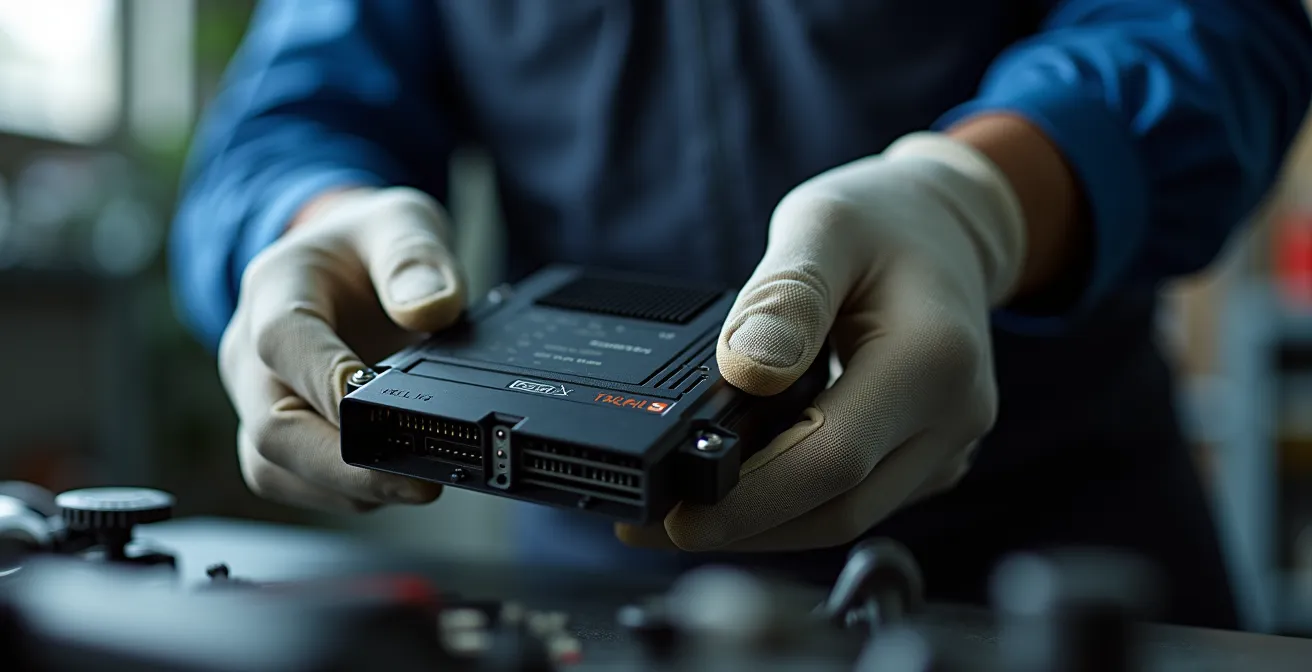
As you can see, a professional approach demands precision and a clean workspace. Once you’ve located the ECU (its position varies by vehicle), take clear photographs of all connectors before unplugging them. This documentation is invaluable for reinstallation. After carefully disconnecting the module, it should be immediately placed in an anti-static bag and prepared for shipping in a foam-padded box with tracking. Never work on a conductive surface; a rubber mat is the preferred choice to ensure complete electrical isolation.
Piggyback Box vs Full Remap: Which Is Safer for Your Warranty?
The choice between a “piggyback” tuning box and a full ECU remap is one of the first major decisions you’ll face. A piggyback box is an external module that plugs into your engine’s sensors. It intercepts the signals sent to the ECU, tricking it into increasing fuel pressure and turbo boost. Its main appeal is that it’s often marketed as “untraceable” because it can be physically removed before a dealer service.
A full ECU remap, on the other hand, is a direct software modification. A tuner connects to your car’s On-Board Diagnostics (OBD) port and overwrites the manufacturer’s original map with an optimised one. This allows for a much more comprehensive and sophisticated calibration, adjusting dozens of parameters simultaneously for a smoother and safer power delivery. However, this process almost always increments the ECU’s “flash counter,” creating a permanent digital footprint.
For a fleet owner or high-mileage driver concerned about warranty, neither option is completely risk-free. Modern ECUs are incredibly sophisticated; they log data on everything. Even after a piggyback box is removed, the ECU will have stored data showing sensor readings (like fuel rail pressure) that were consistently outside of expected parameters. A savvy technician can spot these anomalies. A full remap is even more obvious, as a scan will immediately show the software has been altered, which can trigger a “TD1 flag” in the dealer’s system, automatically voiding the powertrain warranty.
The differences in approach, cost, and risk are laid out in a direct comparison of the two technologies, which highlights the trade-offs.
| Feature | Piggyback Box | Full ECU Remap |
|---|---|---|
| Installation | Plug and play, removable | Software modification |
| Warranty Impact | Can be removed but leaves data traces | Permanent flash counter increment |
| Detection by Dealer | ECU logs anomalies even after removal | TD1 flag immediately visible |
| Performance Gain | 10-20% typical | 20-30% typical |
| Engine Safety | Tricks sensors, less predictable | Comprehensive calibration |
| Cost | £200-400 | £300-500 |
Ultimately, a full remap offers far superior calibration integrity. It recalibrates the entire engine logic for better performance and safety. A piggyback box simply manipulates sensor data, which can lead to less predictable results and potentially higher long-term stress on engine components.
The DPF Clogging Risk of Poorly Tuned Diesel Maps
One of the most significant and costly risks associated with a bad diesel remap is premature clogging of the Diesel Particulate Filter (DPF). The DPF is a critical emissions component designed to capture and burn off soot from the exhaust. This process, known as regeneration, requires precise management of Exhaust Gas Temperatures (EGTs). A poorly designed “economy” tune can disrupt this delicate balance, leading to a filter clogged with soot and ash, which can cost thousands to replace.
The problem arises from how the tune manages fuel and heat. An effective DPF regeneration cycle—both passive and active—depends on maintaining EGTs within a specific window. Some aggressive or poorly developed tunes can alter the post-injection strategy (injecting a small amount of fuel during the exhaust stroke to raise EGTs), causing temperatures to either fall too low for effective passive regeneration or rise too high during an active cycle, potentially damaging the filter’s ceramic core.
Case Study: DPF Temperature Management in Remapped Diesels
Real-world data gathered by TorqueCars from drivers shows a clear link between tune quality and DPF health. Members running professional remaps that maintained proper EGT ranges reported no increase in DPF-related issues over 50,000+ miles. Conversely, multiple cases of premature DPF blocking were linked to “economy” tunes that lowered EGTs below the 450°C passive regeneration threshold. In other instances, aggressive performance tunes that pushed EGTs over 700°C during active regeneration led to cracked or melted ceramic DPF cores.
This highlights the critical importance of vetting your tuner. A reputable specialist will not just add fuel and boost; they will have a deep understanding of the DPF soot and ash models within your specific ECU map. They will log EGTs and differential pressure data during development to ensure their tune supports, rather than hinders, the DPF’s function. Before committing to any tuner, you must ask the right questions to verify their competence.
Action Plan: Vetting a Tuner for DPF Safety
- Ask them to explain how they modify the post-injection strategy for DPF regeneration.
- Verify if they log EGTs and differential pressure across the DPF during map development.
- Confirm that they adjust the DPF’s internal soot and ash accumulation models in the map.
- Request evidence or data logs of successful DPF regeneration cycles on vehicles with their remap.
- Check the tuner’s specific experience with your engine and DPF system, not just the car model.
When to Remap: Before or After Installing Intake and Exhaust?
For drivers seeking to maximize both efficiency and performance, the question of sequencing is crucial: should you install hardware upgrades like a high-flow intake and a performance exhaust before or after the ECU remap? The answer is unequivocally: install all hardware first, then get a custom remap calibrated to those specific modifications. A remap is not a one-size-fits-all product; it is a calibration designed to optimize a specific hardware setup.
An engine is essentially an air pump. Its efficiency is determined by how easily it can breathe in air and expel exhaust gases. Upgrading the intake and exhaust systems reduces restriction, allowing the engine to breathe more freely. This changes a fundamental parameter the ECU relies on: the Mass Airflow (MAF) sensor reading. A high-flow filter and less restrictive exhaust will allow more air into the cylinders for the same throttle input, a change the stock map is not designed to handle optimally.
Flashing a generic “Stage 1” remap onto a car with upgraded hardware is a waste of potential. The map won’t be calibrated to take advantage of the increased airflow. The correct process is to install your hardware, then provide data from your car to the tuner. By logging the new MAF sensor readings (which might show a 15-25 g/s increase in airflow at full throttle), a tuner can write a custom “Stage 2” map. This allows a custom tune accounting for intake and exhaust modifications to safely achieve a 30% or greater power and torque increase, while also optimising fuel efficiency for the new setup.
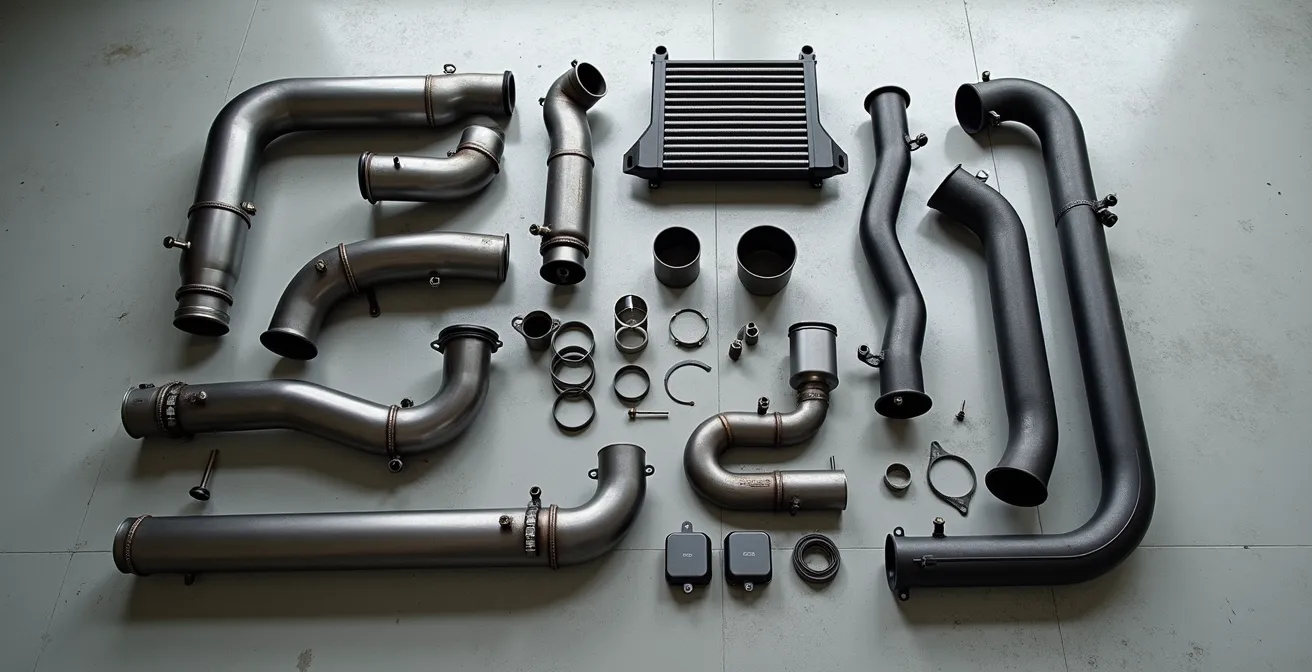
The sequence is therefore critical for achieving the best results and maintaining engine safety. A Stage 2 custom tune will adjust fuel and timing to match the increased airflow, ensuring the air-fuel ratio (AFR) remains safe and you get the full benefit of your investment. Remapping a stock car and then adding hardware later will require a second, completely new remap, costing you more in the long run.
Carbon Offsets vs Direct Reduction: Which Is Less Greenwashing?
In an era of increasing environmental awareness, many companies and individuals turn to carbon offsetting to mitigate their carbon footprint. The concept involves funding projects, like reforestation, that are intended to absorb an equivalent amount of CO2 from the atmosphere. While well-intentioned, the effectiveness and transparency of many offset schemes are often questioned, leading to accusations of “greenwashing”—paying for a clear conscience without making a tangible change.
For a high-mileage driver or fleet owner, there is a more direct and verifiable method of reducing emissions: improving the vehicle’s fundamental efficiency. An economy-focused ECU remap represents a form of direct reduction. Instead of paying a third party to theoretically capture carbon elsewhere, you are modifying your primary asset to burn less fuel for every mile it travels. This reduction is immediate, measurable, and directly tied to your operations.
The financial and environmental case is compelling. Data from fleet tuning specialists shows that economy remapping typically delivers 10-20% fuel savings. Consider the math for an average driver:
- Baseline Calculation: A vehicle covering 20,000 miles a year at 40 MPG uses 500 gallons of fuel.
- Projected Savings: With a 15% improvement, the new MPG is 46, and the vehicle now uses only 435 gallons.
- CO2 Reduction: This 65-gallon saving translates to approximately 1,274 lbs (or 0.58 metric tons) of CO2 that was never emitted.
When you compare the one-time cost of a remap (around £400) to the recurring annual cost of offsetting a similar amount of CO2 (often $50-$100), the remap pays for itself through fuel savings alone, typically within 8 to 12 months. The CO2 reduction is a direct, permanent benefit. This makes an economy remap a far more tangible and less abstract environmental action than purchasing offsets of unverifiable impact.
How to Smooth Underbody Airflow for Better Highway MPG?
While ECU remapping is a powerful tool for improving engine efficiency, it’s not the only way to reduce fuel consumption, especially for vehicles that spend a lot of time at highway speeds. At speeds above 60 mph, aerodynamic drag becomes a dominant force your engine has to overcome. The air flowing over your car is relatively smooth, but the air flowing underneath is a turbulent mess of suspension components, exhaust pipes, and uneven surfaces, creating significant drag.
Smoothing this underbody airflow can lead to noticeable improvements in highway MPG. The principle is to create a flatter, more continuous surface that allows air to pass with less resistance. This is a common strategy in motorsports and is increasingly adopted by manufacturers of modern electric and high-efficiency vehicles. For a diesel truck or van, these modifications can be particularly effective.
Several cost-effective modifications can be made to improve underbody aerodynamics:
- Front Air Dam: Installing a small spoiler at the base of the front bumper helps to divert air away from the turbulent underbody.
- Belly Pans: Adding partial or full belly pans—flat sheets of material like aluminum or coroplast—from the front bumper back to the mid-chassis can dramatically smooth airflow.
- Transmission Tunnel Smoothing: The area around the transmission is often a source of major turbulence. Custom-cut panels can help streamline this section.
- Rear Diffuser: At the very back of the vehicle, a diffuser helps manage the wake turbulence, reducing the low-pressure “pull” on the car.
These aerodynamic improvements have a multiplicative effect when combined with an economy remap. The remap makes the engine more efficient at producing power, while the aero mods reduce the amount of power needed to maintain highway speed. The result is a compounded gain in fuel economy, particularly during long-distance cruising where these effects are most pronounced.
Key Takeaways
- A remap is not magic; it’s a recalibration of factory compromises, trading wide safety margins for optimised performance in a known environment.
- A full software remap offers superior calibration over a piggyback box but leaves a permanent digital footprint (TD1 flag) that can void your warranty.
- The greatest risk of a poor diesel tune is DPF clogging due to incorrect management of exhaust gas temperatures (EGTs) during regeneration cycles.
How to Modify Your Car for Street Use Without Voiding Your Insurance?
Perhaps the most overlooked aspect of vehicle modification is insurance. It’s a simple, unbendable rule: you must declare any modification that alters your vehicle’s performance or value to your insurer. Failure to do so can give your insurance company grounds to reject a claim and void your policy, leaving you fully liable in the event of an accident.
Many drivers fear that declaring a remap will lead to exorbitant premium increases or an outright refusal of cover. While this can be true for aggressive performance tunes, insurers are often more understanding of economy-focused modifications, especially if they are professionally documented. The key is in how you frame the declaration. You are not creating a race car; you are investing in fuel efficiency and reduced emissions.
When contacting your insurer, follow a clear and honest script:
- Lead with the benefit: Start by stating, “I’ve had a professional ECU calibration performed to improve the vehicle’s fuel efficiency.”
- Emphasize the positive impact: Mention that the modification is designed to “reduce emissions and fuel consumption by approximately 10-15%.”
- Differentiate from performance tuning: Clearly state, “This is an economy tune, not a performance modification for increased speed.”
- Provide proof: Offer to supply documentation from the tuner, including their business certification and any dyno sheets that demonstrate the focus on efficiency rather than peak power.
- Mention reversibility: Note that the original factory map has been saved and the process is reversible if required.
As the experts at TorqueCars state, this proactive honesty is crucial for maintaining your coverage.
Always notify your insurers if you get your car tuned/remapped otherwise you may find yourself without cover in the event of an accident. Thankfully many major insurers are sympathetic to tuned/remapped diesels and offer reasonable terms.
– TorqueCars, Guide to Diesel Engine Remaps
By approaching an ECU remap as a strategic investment in efficiency—vetting your tuner, understanding the risks, and communicating transparently with your insurer—you can successfully reduce your fuel costs without compromising the long-term reliability and legal standing of your vehicle. The next logical step is to research qualified specialists in your area who can provide the data-driven, DPF-safe tune your vehicle deserves.