

Despite the flood of “conscious” and “recycled” collections, most sustainable claims from fast fashion brands are a marketing illusion designed to fuel overconsumption.
- The economics of fast fashion rely on selling high volumes of low-quality goods, a model that is fundamentally at odds with true sustainability.
- Terms like “recycled polyester” often hide greater problems, such as increased microplastic pollution and a reliance on single-use plastic bottles instead of true circularity.
Recommendation: Shift your focus from deceptive labels to verifiable actions. Analyze cost-per-wear, investigate brand transparency, and adopt mindful consumption habits to build a genuinely sustainable wardrobe.
You see it everywhere: a rack of jeans made from “recycled materials,” a t-shirt labelled “conscious choice,” or an entire collection bathed in earthy tones and adorned with leaf icons. For shoppers trying to make ethical decisions, these signals seem like a green light. You want to do the right thing, and fast fashion brands appear to be offering an easy, affordable way to do so. It feels like progress, a step towards a more sustainable future where your purchases don’t harm the planet.
But this feeling of reassurance is often by design. The reality is that many of these initiatives are a sophisticated form of greenwashing. They are marketing tactics engineered to make you feel good about buying more, not less. The fundamental business model of fast fashion is built on rapid production cycles, low prices, and encouraging disposability. A truly sustainable approach—producing less, creating durable items, and promoting mindful consumption—is an economic contradiction to their entire existence. So, how can you tell the difference between genuine effort and a clever lie?
The key isn’t to get better at decoding vague labels, but to get better at spotting the inherent hypocrisy. It requires looking past the marketing and analyzing the logic behind the claims. This guide will not just give you a checklist of red flags; it will equip you with a critical mindset. We will dissect the most common greenwashing tactics, from the myth of “eco-friendly” synthetics to the illusion of affordability, empowering you to see what brands are actually doing, not just what they are saying.
This article provides a framework for looking beyond the marketing claims and assessing a brand’s true commitment to sustainability. The following sections will equip you with the tools to become a more discerning and empowered consumer.
Summary: Beyond the Green Label: A Critical Guide to Unmasking Fast Fashion’s Greenwashing
- Why “Recycled Polyester” Isn’t the Savior of Fashion?
- How to Justify Spending $150 on Jeans Using Cost-Per-Wear?
- Vinted vs Ethical Brand: Which Is Truly Better for the Planet?
- The Laundry Error That Releases Microplastics into the Ocean
- How to Wash Clothes Less Often to Extend Their Lifespan?
- The Marketing Mistake That Makes Your Green Claims Look Fake
- How to Build a Capsule Wardrobe with Only 33 Items?
- How to Apply the “30-Day Rule” to Stop Impulse Buying Forever?
Why “Recycled Polyester” Isn’t the Savior of Fashion?
Recycled polyester, often marketed under the abbreviation rPET, is the poster child for fast fashion’s “sustainable” pivot. The story is compelling: we’re taking plastic bottles destined for landfills and oceans and turning them into new clothes. It sounds like a perfect, circular solution. However, this narrative conveniently omits a few critical details. The primary issue is that most rPET is not made from old textiles but from PET bottles. This creates a linear, not circular, system. It takes bottles out of a well-established, closed-loop recycling stream (where they could become new bottles) and turns them into fabric that is, as of today, almost impossible to recycle again at scale. This is a dead end, not a circle.
Even more alarmingly, the environmental benefits are questionable. The process of turning bottles into fiber is chemically intensive, and the final product may be even more harmful than its virgin counterpart. Research reveals that recycled polyester can shed more microplastics than virgin polyester during washing. According to a study from the Changing Markets Foundation, some recycled fabrics release up to 55% more microplastic particles. This means every time you wash that “eco-friendly” fleece, you could be releasing a cloud of microscopic plastic pollution into the water system, directly contradicting the environmental promise made at the point of sale.

This is a classic example of volume-based deception. A brand can tout its use of recycled polyester while continuing its overproduction model, effectively cloaking its massive environmental footprint behind a small, seemingly positive initiative. A truly sustainable brand would not only use recycled materials but also address the microplastic shedding issue, invest in fiber-to-fiber recycling technology, and, most importantly, reduce its overall production volume.
How to Justify Spending $150 on Jeans Using Cost-Per-Wear?
The most powerful lure of fast fashion is its price tag. A $20 pair of “sustainable” jeans feels like an undeniable win, while a $150 pair from an ethical brand can seem extravagant. This is where the concept of Cost-Per-Wear (CPW) becomes an essential tool for unmasking greenwashing. CPW reframes value not by the initial cost, but by how much you pay each time you wear an item. It reveals the false economy of cheap clothing and the long-term financial sense of investing in quality.
Fast fashion items are often designed for a short lifespan, a strategy known as calculated obsolescence. Materials are thin, stitching is weak, and they quickly lose their shape after a few washes. It’s no surprise that studies show fast fashion items are worn on average only 7 times before being discarded. A $20 pair of jeans worn 10 times has a CPW of $2.00. In contrast, a well-made $150 pair of jeans designed to last for years could be worn 200 times or more, resulting in a CPW of just $0.75. Suddenly, the “expensive” pair is more than twice as economical.
This simple calculation exposes the greenwashing of low-cost “eco” products. When a brand markets a $20 item as sustainable, the math often doesn’t add up.
Case Study: The Price-Promise Impossibility Check
When analyzing a $20 ‘organic cotton’ jean claiming ethical wages and eco-friendly production, the math reveals the deception: Raw organic cotton costs ~$5-8 per garment, ethical labor adds ~$10-15, eco-friendly dyeing ~$3-5, plus transportation and retail markup. The true cost for genuinely sustainable jeans starts at $60 minimum, making ultra-cheap ‘sustainable’ claims mathematically impossible and a clear greenwashing red flag.
Thinking in terms of CPW is a powerful mental shift. It forces you to prioritize durability, timeless style, and quality over the fleeting thrill of a bargain. It’s a direct antidote to the disposable mindset that fast fashion thrives on.
Vinted vs Ethical Brand: Which Is Truly Better for the Planet?
The rise of secondhand platforms like Vinted, Depop, and The RealReal seems like a definitive win for sustainable fashion. Buying pre-owned extends a garment’s life, reduces demand for new production, and keeps clothing out of landfills. For many, choosing secondhand feels inherently more virtuous than buying new, even from an ethical brand. However, the dynamic is more complex than it appears, especially when fast fashion is involved.
Secondhand platforms can inadvertently become a release valve for fast fashion overconsumption. The ability to easily resell a trendy, barely-worn item for a few dollars can lower the guilt associated with impulse buying. It creates a mindset where clothes are not seen as long-term possessions but as temporary assets to be churned. This churn still feeds the fast fashion ecosystem, validating the initial overproduction. Furthermore, some fast fashion giants are now launching their own resale platforms, a move that is often pure profit-driven planet-washing. These platforms allow them to appear circular while doing nothing to address their core business model of overproduction. It’s a way to capture a second revenue stream from the same low-quality item.
Case Study: Fast Fashion’s Resale Greenwashing Strategy
Major fast-fashion retailers are creating their own resale platforms to appear circular without addressing overproduction. H&M’s ‘H&M Conscious’ collection, which often represents less than 5% of its total production, faced a Norwegian Consumer Authority investigation in 2021 for misleading marketing claims. These platforms create a guilt-free pass for continued overproduction, allowing brands to frame disposability as ‘circularity’ while maintaining business models dependent on constant consumption.
So, which is better? Buying a new, ethically made item from a brand that pays fair wages and uses sustainable materials supports a positive production system. It’s a vote for the fashion industry you want to see. Buying a high-quality, pre-owned item is also an excellent choice. The problem arises when secondhand markets are primarily flooded with low-quality fast fashion, perpetuating a cycle of disposability. The most sustainable option is to buy less overall, and when you do buy, prioritize durable, well-made items, whether they are new from an ethical brand or secondhand.
The Laundry Error That Releases Microplastics into the Ocean
The environmental impact of our clothes doesn’t end at the checkout. One of the most significant and overlooked sources of pollution happens right in our homes: the laundry machine. Every time we wash synthetic fabrics like polyester, nylon, and acrylic, they shed thousands of microscopic plastic fibers. These microplastics are too small to be caught by wastewater treatment plants and flow directly into our rivers and oceans, where they are ingested by marine life and enter the global food chain. It’s a silent, invisible environmental disaster unfolding with every wash cycle.
This problem is massively exacerbated by fast fashion. The industry’s reliance on cheap synthetic materials means our wardrobes are packed with plastic. Worse, the poor quality of these garments means they shed fibers at a much higher rate. A single laundry cycle can release up to 900,000 microplastic fibers. When a fast fashion brand promotes a “recycled polyester” collection without providing solutions to mitigate microplastic shedding—such as recommending a Guppyfriend washing bag or investing in filtration technology—it is engaging in blatant greenwashing. They are marketing a “solution” that contributes directly to a problem they refuse to acknowledge.
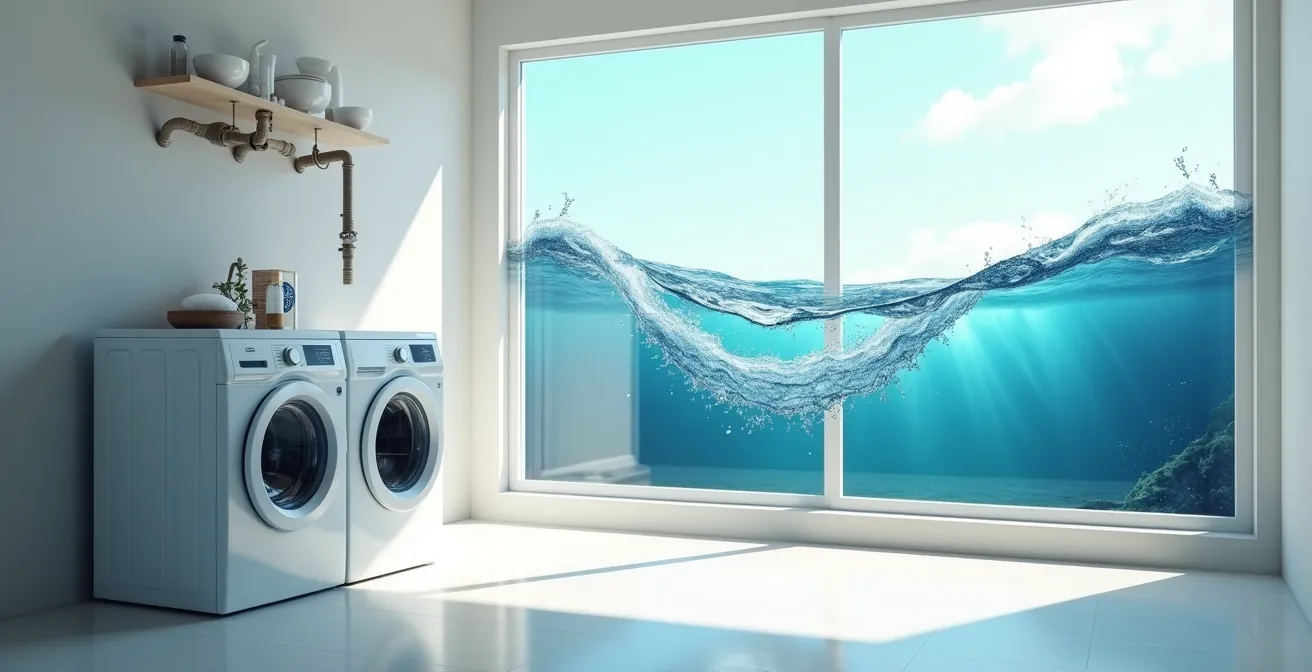
The durability of a garment is therefore a key indicator of its true sustainability. A genuinely sustainable brand will use high-quality materials and construction techniques that minimize shedding. They will also be transparent about the issue and educate their customers on responsible care. If a “sustainable” item comes with care instructions like “delicate wash only,” it’s a major red flag that signals poor quality and high potential for shedding. True sustainability is built to last, not to disintegrate in the wash.
How to Wash Clothes Less Often to Extend Their Lifespan?
One of the most effective and simplest ways to reduce your fashion footprint is to wash your clothes less. This simple act saves water and energy, reduces microplastic pollution, and dramatically extends the lifespan of your garments by reducing wear and tear. Many items, like jeans, sweaters, and jackets, do not need to be washed after every single wear. Simply airing them out or spot-cleaning small stains is often sufficient. Adopting this habit is a powerful step towards a more sustainable relationship with your wardrobe.
However, this advice exposes a deep economic contradiction within the fast fashion industry. As sustainable fashion advocate Urska Trunk of the Changing Markets Foundation notes:
Fast fashion profits from clothes wearing out quickly. Therefore, any ‘wash less’ claim from a fast-fashion giant is fundamentally at odds with their financial goals
– Urska Trunk, Changing Markets Foundation
A brand that relies on you replacing items frequently has no genuine interest in helping you make them last longer. This is why material choice is such a crucial indicator of true sustainability. Ethical brands often favor materials that are naturally low-maintenance and durable. Merino wool, for example, is naturally antimicrobial and odor-resistant, requiring far less frequent washing than a synthetic sweater. Hemp becomes softer and stronger with each wash, and high-quality linen is breathable and can be worn many times between cleanings. In contrast, cheap synthetics often trap odors and need to be washed more frequently, accelerating their own demise in a cycle of calculated obsolescence.
When a brand’s primary materials require constant washing and replacement, any “wash less” advice on their blog is pure performance. The real measure of their commitment is in the materials they choose and the durability they design into their products.
The Marketing Mistake That Makes Your Green Claims Look Fake
Greenwashing isn’t always about complex supply chains or material science; often, it’s about simple visual and verbal cues. Fast fashion brands have become masters of using a specific aesthetic to imply sustainability without any substance to back it up. This includes using earthy color palettes (beige, olive green, brown), decorating marketing materials with images of nature (leaves, water, forests), and using vague, unregulated terms like “eco-friendly,” “conscious,” and “green.”
These tactics are designed to create a mental shortcut for the consumer. You see green, you think “planet-friendly.” You see a leaf icon, you assume it’s natural. But these symbols are often meaningless. Without a specific, verifiable certification (like GOTS for organic cotton or Fair Trade), these are just decorations. According to the Changing Markets Foundation, a staggering 59% of green claims by European and UK fashion brands were unsubstantiated or misleading. This widespread deception erodes consumer trust and makes it harder for genuinely sustainable brands to be heard.
One of the most common visual greenwashing tactics is the “capsule collection.” A brand will launch a small “Conscious Collection” and promote it heavily, distracting from the fact that 95% or more of their business remains rooted in the unsustainable fast fashion model. They use this tiny, “green” fraction of their inventory to create a halo effect, hoping the positive association will spill over onto their entire brand. It’s a classic bait-and-switch, focusing your attention on the good while the bad continues at an enormous scale.
Your Visual Greenwashing Bingo Card
- Earthy Palettes: Spotting beige, green, or brown color schemes on products made from 100% synthetic materials.
- Nature Imagery: Finding leaves, trees, or water in ads for factory-made goods with no connection to nature.
- Meaningless Icons: Identifying leaf or water-drop symbols on tags that are not linked to a recognized certification.
- Vague Language: Highlighting words like ‘eco,’ ‘conscious,’ or ‘green’ on product descriptions without any specific data or proof.
- The Halo Collection: Noticing a small ‘sustainable’ collection being heavily promoted while the majority of the brand’s products remain unchanged.
By learning to recognize these superficial marketing tactics, you can start to look past the visual noise and demand real transparency and quantifiable data instead of just a pretty, green-tinted picture.
How to Build a Capsule Wardrobe with Only 33 Items?
The concept of a capsule wardrobe—a curated collection of a small number of essential, versatile items—is a powerful antidote to fast fashion’s culture of excess. It encourages a “buy less, choose well” philosophy, shifting the focus from quantity to quality and personal style. By limiting your wardrobe to around 33 items per season (including tops, bottoms, outerwear, and shoes), you are forced to be more intentional with every purchase, ensuring each piece is durable, timeless, and works with multiple other items.
However, the capsule wardrobe philosophy can be co-opted and greenwashed. A capsule built from 33 poor-quality, trend-driven fast fashion items—even if they come from a “conscious” collection—defeats the entire purpose. Such a wardrobe will need to be replaced quickly, perpetuating the cycle of consumption and waste. As sustainable stylist Roberta Lee states, “A 33-item capsule built from greenwashed fast-fashion impulse buys is an environmental failure. The focus isn’t the number, but the sourcing intentionality behind each piece.” The success of a capsule lies in the longevity and versatility of its components.
The mindset behind a true capsule wardrobe is fundamentally opposed to the fast fashion model. It’s about investing in your style for the long term, not chasing fleeting micro-trends. Before adding any item to your capsule, you should ask if it will last for years, not just weeks, and if it can be styled in multiple ways.
The following table, inspired by an analysis from Conscious Life & Style, highlights the deep philosophical divide between these two approaches.
| Aspect | Capsule Wardrobe Approach | Fast Fashion ‘Conscious’ Collections |
|---|---|---|
| Purchase Strategy | Buy less, choose better quality | Buy more items with ‘green’ labels |
| Item Versatility | Each piece works with multiple outfits | Trend-specific, limited styling options |
| Longevity Focus | Timeless pieces lasting years | Micro-trends lasting weeks |
| True Cost | Higher upfront, lower cost-per-wear | Lower upfront, higher replacement costs |
| Environmental Impact | Reduced consumption and waste | Continued overproduction with green marketing |
Ultimately, a capsule wardrobe is not a numbers game; it’s a change in mindset. It’s about building a functional and beautiful wardrobe with pieces you love and will wear for years, a goal that is only achievable by rejecting the disposable logic of fast fashion.
Key Takeaways
- Greenwashing is an economic necessity for fast fashion, not an accidental mistake. Their business model depends on it.
- Focus on verifiable data over vague language. Ask for percentages, certifications, and factory locations, not just “eco-friendly” promises.
- True value is measured by cost-per-wear, not the initial price tag. Investing in durability is both economically and environmentally superior.
How to Apply the “30-Day Rule” to Stop Impulse Buying Forever?
Impulse buying is the engine of fast fashion. Brands engineer a constant sense of urgency and novelty to encourage you to buy without thinking. The “30-Day Rule” is a simple yet profoundly effective behavioral trick to counteract this. The rule is straightforward: whenever you feel the urge to buy a non-essential item, especially clothing, you must wait 30 days before making the purchase. Add it to a list, and if you still genuinely want and need it after 30 days, you can consider buying it.
This forced waiting period does two things. First, it separates the fleeting desire for novelty from a genuine need. More often than not, the urge will have passed by the end of the month. Second, it gives you a crucial window of opportunity for research. Instead of making an emotional decision, you have time to make a rational one. This 30-day “brand investigation sprint” is your most powerful tool against greenwashing. It allows you to move beyond the marketing page and dig into a brand’s actual practices.
Of course, fast fashion brands are experts at defeating this kind of thoughtful consideration. They use tactics specifically designed to create FOMO (Fear of Missing Out) and bypass your rational brain. Limited stock alerts, flash sales on “sustainable” collections, and daily drops of thousands of new styles all create an atmosphere of artificial scarcity. As detailed in a case study by Eco-Stylist, when a brand that claims to be “green” rushes you to buy, it reveals a massive hypocrisy. Genuine sustainability encourages thoughtful consumption, not panicked, impulse-driven clicks. This pressure is an immediate red flag.
Your 30-Day Brand Investigation Sprint Checklist
- Days 1-7: Initial Screening. Research the brand on independent rating platforms like Good On You to get a baseline score on its labor, environmental, and animal welfare practices.
- Days 8-14: Labor Practices Deep Dive. Search for recent news articles about the brand’s factory conditions, worker wages, and any involvement with labor rights organizations. Look for a public factory list.
- Days 15-21: Sustainability Report Analysis. Find and read the brand’s official sustainability report (not the marketing page). Look for specific, time-bound goals and progress reports, not vague aspirations.
- Days 22-28: Wardrobe Versatility Assessment. Go back to your own closet. How many existing outfits can you create with this new item? If the answer is less than three, its versatility is questionable.
- Days 29-30: Final Cost-Per-Wear Calculation. Based on its quality and your lifestyle, realistically estimate how many times you will wear it. Calculate the cost-per-wear and decide if the investment is truly worth it.
By transforming the impulse to buy into a 30-day research project, you fundamentally change your relationship with shopping. You shift from being a passive consumer to an active investigator, making it nearly impossible for greenwashing to succeed.
Start applying these critical lenses to your next purchase. By shifting from a passive consumer to an active investigator, you not only protect yourself from misleading marketing but also cast a powerful vote for a fashion industry that values transparency, quality, and the planet over profit.